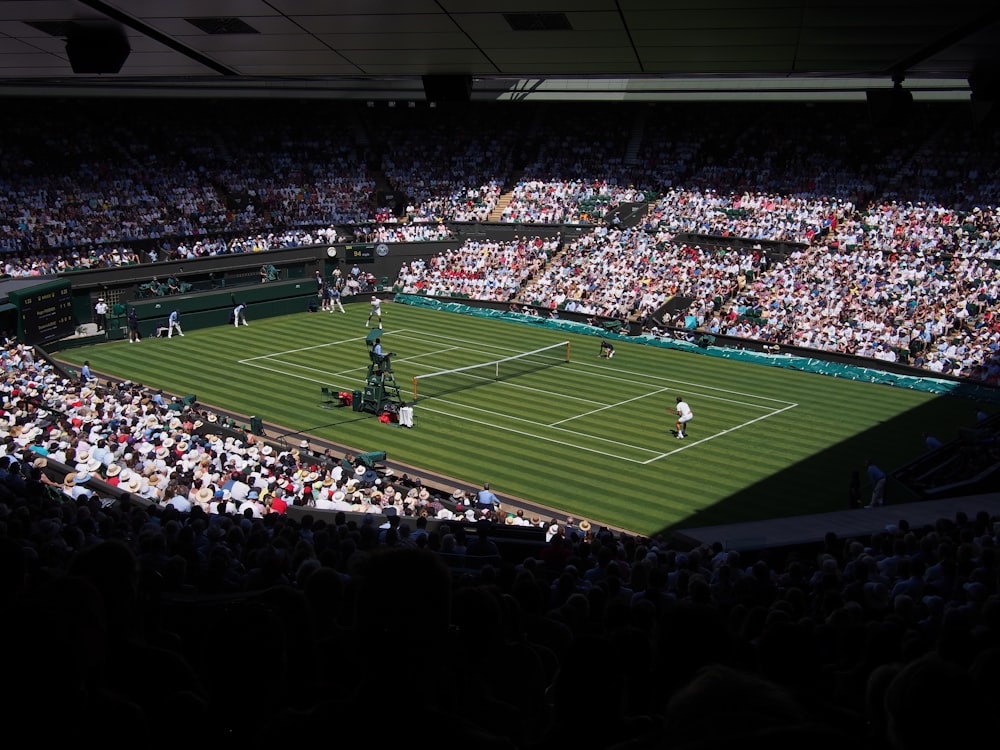
This week Wimbledon announced that they will be banning all Russian and Belarusian nationals from playing in this year’s competition. This is in response to the Russian invasion of Ukraine and the ongoing atrocities that we are seeing unfurl on the news each day.
The ban will have a huge effect on the sport and will see 5 of the women’s top 30 and 4 of the men’s top 30 ranked players ruled out of the competition due to their nationality.
Around the world there has been debate over how to properly punish Russia and harm their interests on a global scale, but this seems to be the first case of a sporting event banning individuals who are not actively representing the Russian nation.
The fact that this is being done by Wimbledon, the most famous grand slam in tennis, could either stand alone as an act of discrimination or start a chain reaction of bans to Russian athletes.

Tennis is known as a sport for individuals, where two opponents clash in a battle of mind and body. For an individual to be banned from a sporting event based on their nationality is a strange precedent to set.
Earlier this year we saw the dramatic Djokovic saga play out at the Australian Open, which at the time seemed like it would be the most dramatic story from the tennis world this year. This resulted in the athlete being banned from the event due to his vaccination status, which was a huge issue for many fans and sparked widespread debates.
That ban had characterised a public debate over vaccine mandates and public health, what we are seeing in Wimbledon appears to be something entirely different. There is a huge distinction in being banned for a personal choice and being banned for your nationality. You don’t choose your nationality, plain and simple, so what ground does Wimbledon have to ban competitors purely on this basis?
Due to events going on in Russia and Ukraine there are now players (who may not even live or vote in their country of birth) being persecuted so that Wimbledon can feel like they are ‘doing their bit’. You could call it virtue signalling, you could call the organisers Russophobes, but it is very hard to call the decision fair.
If this is the way that sporting institutions want to operate then who else should be banned? Should Israeli athletes be banned from events based on their home country’s treatment of Palestinian civilians?
Something tells me that this will not be the case, in the same way that we saw no punishments meted out toBritish and American athletes during their invasion of Middle Eastern countries. Picking and choosing which wars and conflicts warrant such bans is a strange game to play and presents clear biases.
It seems like this whole thing will only serve to divide Russian people from the rest of Europe; after all, it is not them who started the war. Any people of Russian origin living abroad will likely feel more isolated now than they have since the Cold War as they are demonised for the actions of the tyrannical regime in charge of their home nation.
Some of the very people that are being ostracised may have left Russia because of the authoritarian power of Putin’s Kremlin. This begs the question, what use is it making them feel like the enemy here as well?

I do believe that the majority of sanctions on Russia are just and that we can’t just stand by and watch what Putin’s regime is doing in Ukraine. It is horrifying and we should try to assist Ukraine in the same way that we should assist other victims of aggression.
However, these acts of soft power seem like they are biased and unjust in the case of Wimbledon’s decision. This isn’t a Russian football team playing at the World Cup and singing their national anthem before every game.
Tennis, like every sport, does have national undertones where fans cheer on their fellow countrymen and women. Despite this, it is primarily a sport played by individuals representing themselves as an independent entity.
Wimbledon are choosing to isolate these individuals, which could promote an even greater rift between Russians and the rest of Europe. Forcing them to take the role as the ‘other’ in society seems like it will only lead to more conflict down the line.
Words by Ewan Blacklaw
Header photo: “Wimbledon” by paulafunnell is marked with CC BY-NC-ND 2.0.

 inertia
Leave a comment